Collision & Accident Repair
Collision & Accident Repair
A collision is stressful enough without having to worry about whether the repair will be done properly. At DOP RESPRAY & DETAILING, we handle accident repair end to end — from insurance assessment and documentation through to panel beating, structural realignment, refinishing and final quality check. Every repair is done to OEM-standard using genuine materials, and we work directly with all major Kenyan insurers on direct-billing claims. Whether it's a small car park dent or serious collision damage, we treat every job with the same discipline: understand the full extent of the damage first, fix what needs fixing, and deliver a car that's safe and looks factory-fresh. Free inspection and honest assessment on every job.
- Free inspection & insurance assessment
- Direct billing with major Kenyan insurers
- OEM-grade panels, paint & materials
- Written workmanship warranty on repairs
The difference between cosmetic and structural damage
Not all accident damage is what it looks like on the surface. There are two categories of damage, and understanding the difference matters:
Cosmetic Damage
Scratches, scuffs, small dents, cracked bumper covers, chipped paint. Structurally safe but visually damaged. Refinishing or PDR (paintless dent removal) can often fully restore the appearance.
Structural Damage
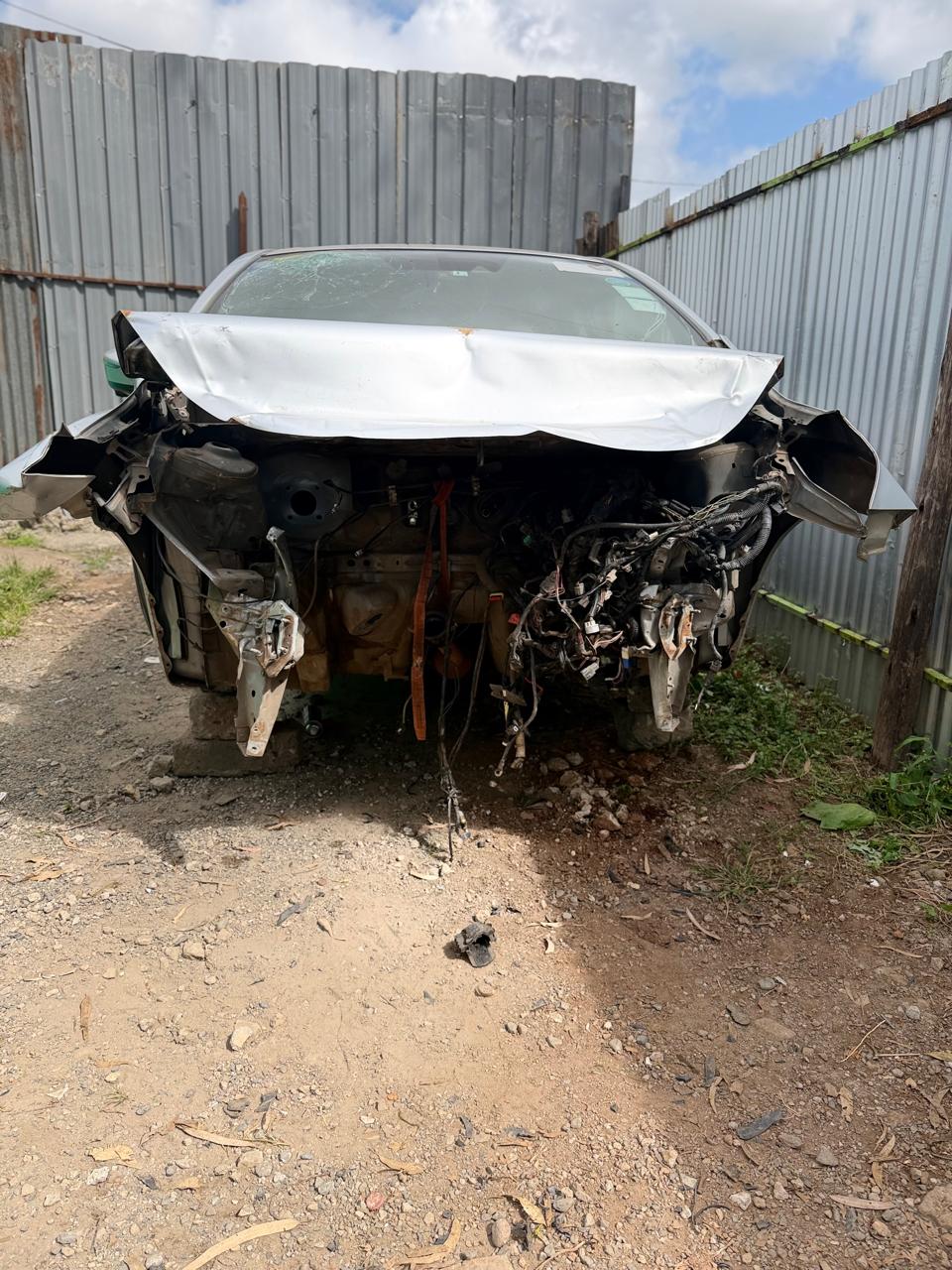
Deformation of the chassis, misalignment of panel gaps, damage to suspension mounting points, bent subframes. Requires proper realignment before any cosmetic work — otherwise the car may never drive straight or handle correctly again.
Both Combined
Most real-world accident damage falls here. The visible panels are damaged AND the structure beneath is affected. Proper repair requires structural realignment first, then cosmetic refinishing — in that order.
We always inspect for structural damage first, because it determines whether a repair will actually restore the car's safety and driving characteristics — not just its appearance. If a car has significant structural damage, we'll tell you honestly rather than hide it under cosmetic work.
Repairs we handle
From minor parking incidents to major collision damage, our capabilities cover:
- Panel beating & dent removal — from small dents to full panel reshaping using hand tools and heat.
- Bumper repair or replacement — plastic welding, crack repair, or full bumper replacement with colour match.
- Structural realignment — chassis, subframe and mounting point correction to restore factory geometry.
- Weld repairs — replacing rusted or damaged metal sections with proper MIG/TIG welding.
- Panel & door replacement — new or OEM-grade used panels fitted and colour-matched.
- Bumper & trim restoration — fog lights, grilles, sensor recalibration where needed.
- Full refinishing — respray of repaired panels in factory-matched colour, blended to adjacent panels.
- Glass & light replacement — windscreens, side glass, headlights and taillights.
How insurance claims work with us
We work directly with all major Kenyan insurers and can handle the majority of the claims process on your behalf:
Step 1 — Report & Assess
Bring your car to us with your claim reference. We complete the damage assessment report, take photos and prepare the documentation your insurer needs.
Step 2 — Insurer Approval
We submit the assessment to your insurer. Where they approve and you have a policy allowing it, we arrange direct billing — you don't pay out of pocket and wait for reimbursement.
Step 3 — Repair & Handover
Once approved, we complete the repair. You're kept informed of progress throughout. Final handover includes an inspection, warranty documentation and a clean car.
If you're paying privately, we quote the repair clearly before starting. No hidden fees, no surprise additions. If we discover additional damage during disassembly (which is common with hidden structural damage), we call you before doing anything — never a surprise invoice.
How the process works
Damage Inspection & Assessment
Full inspection of visible and hidden damage — panel gaps, alignment, structural integrity. We photograph everything and prepare a detailed damage report. For insurance claims, this document goes directly to your insurer.
Disassembly & Hidden Damage Check
Damaged panels are carefully removed so we can see what's underneath. This is where hidden structural damage, corroded mountings or bent subframes are revealed. If we find more than the initial assessment showed, we call you immediately with a revised scope.
Structural Realignment
Where needed, the vehicle is straightened using controlled hydraulic pulling to restore factory dimensions. Panel gaps, door alignment and suspension geometry are all checked against manufacturer specifications.
Panel Repair or Replacement
Dented panels are beaten back into shape where possible; damaged or rusted panels are replaced with new or OEM-grade used panels. Welding is done properly, with corrosion protection applied on the reverse side to prevent rust from forming later.
Body Filler & Block Sanding
Minor surface imperfections are filled with quality body filler, then block-sanded to perfectly flat. This stage determines how smooth the final paint will look — a rushed job shows waviness and orange peel in the finished paint.
Primer & Paint Preparation
Primed panels are wet-sanded to remove any remaining imperfection, then cleaned and prepared for base coat. Panels are masked carefully to protect adjacent areas of the car that aren't being sprayed.
Colour-Matched Refinishing
We use computerised colour matching and hand-tint sample panels under daylight-balanced lighting. The repaired panel is blended into adjacent panels so the repair is invisible — no visible paint edge or colour mismatch.
Reassembly, Polish & Final Inspection
Panels and trims are reassembled, then the whole affected area is machine polished to remove any overspray or slight finish difference. Final inspection under bright light. If we're not satisfied, it doesn't go out.
What to do immediately after an accident
If you've just had an accident, these steps protect your claim and get the repair started correctly:
- Move to safety — get yourself and other occupants to a safe location away from traffic. Turn on hazard lights.
- Take photos before moving anything — every angle, close-ups of damage, the other vehicle, road position, any injuries. Timestamps help.
- Exchange details — name, phone, ID, insurance provider, policy number, vehicle registration of the other driver.
- Report to police if required — for any incident with injuries or significant damage, a police abstract is often needed for insurance claims.
- Notify your insurer within 48 hours — most Kenyan policies require prompt reporting. Late reporting can weaken your claim.
- Bring the car to us for assessment — even if you haven't decided who will repair it yet. Our assessment is free and gives you a clear picture of the damage.
- Don't accept a low "cash settlement" without a real repair quote — insurers sometimes offer a quick payout that won't cover proper repair. Get our independent assessment first.
Aftercare for your repaired vehicle
Once we hand your car back, the repair should be treated like new paint for the first few weeks:
- Wait 30 days before waxing or ceramic coating — new paint needs to fully cure before being sealed. We'll advise exact timing based on the repair.
- Avoid automatic car washes with brushes — new paint is softer for the first month and more susceptible to fine scratches.
- Hand wash with pH-neutral shampoo — this protects both the new paint and any existing ceramic or PPF.
- Book a 2-week check-up with us — we inspect the repair for any settling, panel alignment or paint reaction. Free of charge.
- Consider ceramic coating or PPF after curing — this protects the new paint and the rest of the car against future damage. A wise investment after a major repair.
- Keep your repair documentation — useful if you ever sell the car, and essential if there's a warranty claim on the repair itself.
How long does accident repair take?
Timelines vary hugely depending on the extent of damage and whether insurance approval is needed:
- Minor cosmetic damage (scuffs, small dents): 1–3 days.
- Panel replacement & refinishing: 3–7 days.
- Structural repair (chassis, subframe): 1–3 weeks, depending on parts availability.
- Major collision damage: 3–6 weeks+ for full repair with extensive parts replacement.
- Insurance approval delays can add 1–7 days before work starts.
We'll give you a firm timeline at the assessment stage and keep you updated as work progresses. No vague promises — you'll know exactly where your car is in the process.
Why choose DOP RESPRAY & DETAILING for accident repair?
Accident repair is a service where cheap shortcuts cause serious problems — misaligned panels, unsafe structural repairs, colour-mismatched paint, rust forming under filler within 12 months. We refuse to work that way. Every repair at DOP uses proper structural realignment, quality body filler applied with discipline, genuine paint matched under controlled lighting, and corrosion protection on hidden surfaces. We also work with all major insurers and take responsibility for the documentation so you don't have to chase anyone.
We also care about the small things — cleaning your car before handover, taking photos of the repair process, keeping you informed. Because coming out of an accident is stressful enough.
Frequently asked about accident repair
Do you work with all insurance companies?
Will my repaired paint match the original colour?
Do you use genuine panels and parts?
Can you repair structural damage, or is the car a write-off?
Will repair affect my car's resale value?
Can you repair the car without insurance involvement?
What if more damage is found after starting the repair?
How much does accident repair cost?
Get an instant quote for Collision & Accident Repair
Free inspection, insurance-friendly assessment, and honest advice — ready in under two minutes.