
Watermark & Mineral Removal
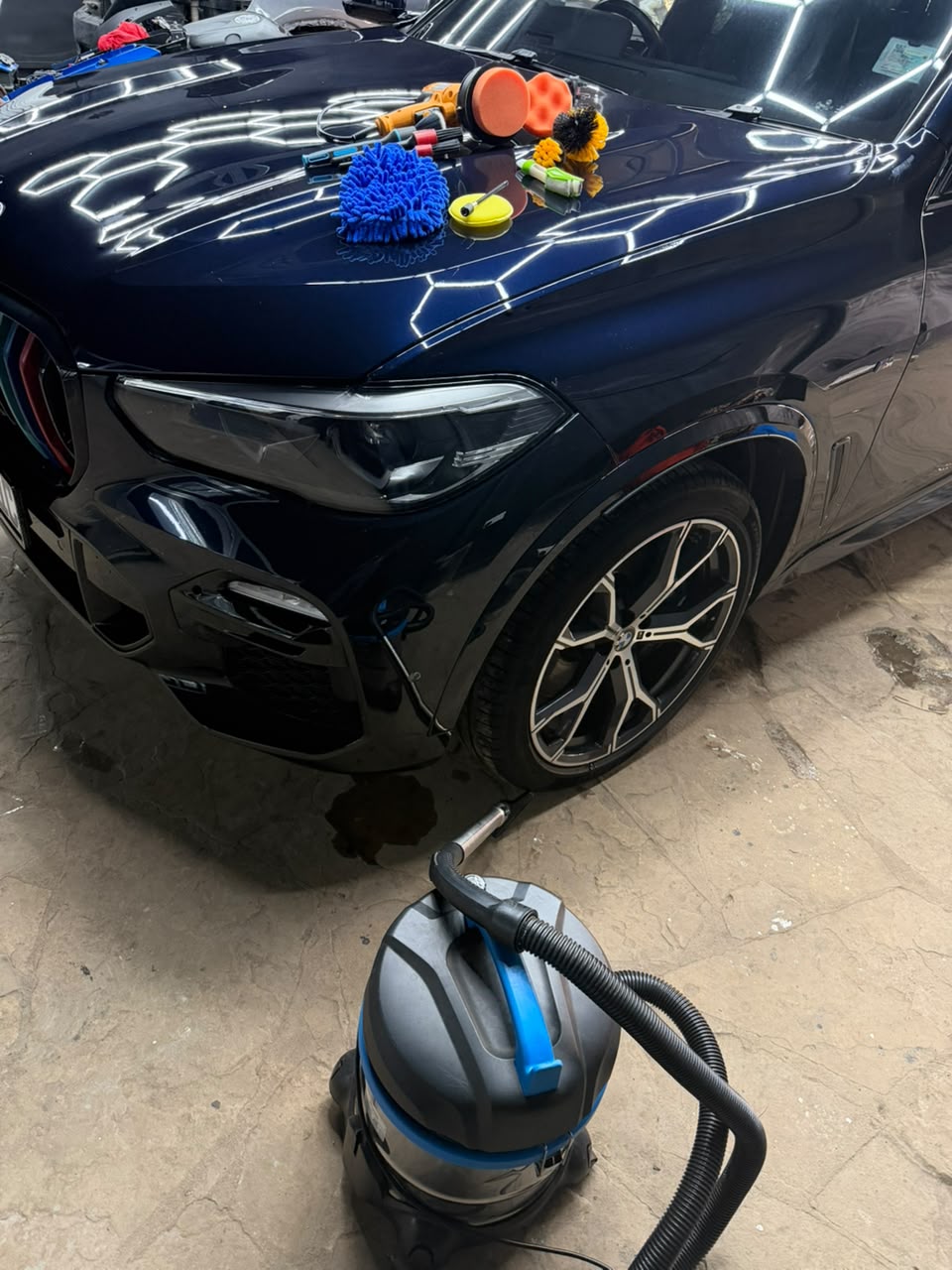
Watermark & Mineral Removal
Watermarks — those chalky, mottled rings that appear on paint and glass after rain dries or a sprinkler gets on the car — are far more stubborn than they look. They're not just dried water; they're mineral deposits (calcium, magnesium, silica) that have chemically bonded to your clear coat or glass. Over time, if left untreated, they can actually etch into the surface permanently. Our Watermark & Mineral Removal service is a specialist process that dissolves these deposits safely, restoring clarity that washing, buffing or household products simply cannot achieve. Every job starts with a free inspection so we know exactly what we're dealing with.
- Free inspection & instant quote
- Acid-free mineral dissolving treatment
- Safe on clear coat, glass, chrome and trim
- Protective sealant included after treatment
How watermarks form — and why they're hard to remove
Nairobi's water, whether from rain, boreholes or municipal supply, contains dissolved minerals — primarily calcium and magnesium, but also silica in some areas. When water sits on your paint or glass and evaporates, those minerals don't disappear with the water. They're left behind, bonded to the surface in a microscopically rough pattern that diffuses light — which is why a watermark looks cloudy, chalky or mottled.
The longer these deposits sit, the harder they bond. Initially, a mild watermark might disappear with a good wash. After a few weeks, it starts requiring chemical treatment. After months, particularly under hot sun, the minerals can actually etch into the clear coat or glass — leaving a physical mark that only polishing or, in severe cases, panel refinishing can remove. This is why catching watermarks early matters so much.
Where watermarks most commonly appear
Anywhere water sits and evaporates, watermarks can develop. The most common areas we treat:
Bonnet & Roof
The most exposed surfaces. Rain and dew evaporate here first, leaving mineral rings on the horizontal paintwork.
Windscreen & Windows
Especially when wiper blades smear mineral-rich water. Glass watermarks reduce visibility and cause streaks in sunlight and at night.
Boot Lid & Rear Glass
Water pools in these areas and often sits undisturbed longer than the roof or bonnet.
Chrome & Brightwork
Mineral deposits etch into chrome, leaving dull spots that even metal polish struggles to remove once dried.
Trim & Plastic Bumpers
Textured plastic traps minerals quickly, resulting in chalky white patches that stand out badly against a black bumper.
Headlights & Taillights
Watermarks on lens covers reduce light output and dull the car's front and rear appearance.
How the process works
Inspection & Severity Assessment
The affected areas are inspected under controlled lighting to determine whether the deposits are surface-level or already etched into the clear coat. This determines which treatment is appropriate — some watermarks can be dissolved chemically; others need polishing.
Decontamination Wash
Before treatment, the vehicle is washed to remove loose dirt and road film. Treating watermarks on a dirty surface risks pushing grit into the paint during the chemical process.
Mineral Dissolving Treatment
A specialist acid-free mineral remover is applied to affected areas and allowed to dwell. This dissolves the calcium and magnesium bonds without harming the clear coat or glass. This is a controlled chemical process — not a household vinegar trick that risks damage if left too long.
Agitation & Rinsing
The dissolved minerals are agitated with soft detailing brushes, then rinsed thoroughly. Multiple treatment passes may be needed on stubborn deposits.
Follow-Up Polishing (if required)
If the watermarks have started to etch the surface, we follow with a fine machine polish to level the affected area and remove any remaining shadow. This step is common on older or neglected watermarks.
Protective Sealing
Treated surfaces are sealed with a hydrophobic coating. This is what prevents watermarks from returning immediately — without protection, hard water will start re-bonding within weeks. Sealant is included as standard.
Final Inspection
The vehicle is inspected under bright light at multiple angles. Any remaining shadow or etching is flagged to you honestly so you know exactly what's been achieved.
Etched watermarks — when correction is needed
Not every watermark can be simply dissolved. When minerals have etched into the clear coat, the deposit itself is gone — but it has left a physical crater in the surface. In these cases, chemical treatment is only the first step; we then perform machine paint correction to level the surface. This is why some jobs are quick (chemical treatment only) and others take longer (chemical + polishing). We'll always tell you honestly which category your car falls into during inspection.
For severely etched paint — where a watermark has reached through the clear coat — the affected panel may require refinishing to fully restore. This is rare and only happens with long-term neglected watermarks. We'll advise clearly on the options and costs.
Maintenance tips to prevent watermarks
Prevention is dramatically cheaper than removal. These habits will keep your car clear of new watermarks:
- Dry the car properly after washing — leaving it to air-dry in Nairobi's sun is the single biggest cause of fresh watermarks.
- Use a microfibre drying towel — not a chamois or old rag. Microfibre absorbs without scratching, and doesn't leave trapped mineral residue.
- Wipe off rain or sprinkler spots immediately — if you notice fresh water marks, a quick wipe with a damp cloth prevents them from drying and bonding.
- Apply a ceramic coating or sealant — a hydrophobic layer dramatically reduces how quickly minerals bond and makes removal far easier if they do.
- Avoid parking near sprinklers — borehole and municipal irrigation water is especially mineral-heavy, and repeated sprinkler exposure causes severe watermarks fast.
- Consider a car cover for long periods of outdoor parking — especially during dry season when dust + dew create constant mineral spotting.
- Wash regularly — every 2 weeks with a proper hand wash is far more effective than occasional deep cleans. Watermarks are easiest to remove when they're fresh.
How often should you treat watermarks?
Watermark treatment isn't a scheduled service — it's reactive. You treat it when you notice it. That said, a protected car with a ceramic coating or regular sealant applications will resist watermarks for a year or more, while an unprotected car parked outdoors may develop visible watermarks in as little as 4–6 weeks in Nairobi's conditions. If you notice spotting that doesn't come off in a normal wash, that's the signal to book treatment — the sooner, the easier and cheaper to remove.
Why choose DOP RESPRAY & DETAILING for watermark removal?
Watermark removal is one of the services where doing it wrong causes more harm than good. Over-the-counter acidic removers, vinegar washes and aggressive buffing can all strip clear coat or damage glass if used incorrectly. Our technicians use only acid-free mineral dissolving treatments specifically designed for automotive paint and glass, applied with controlled dwell times and safely rinsed off. When polishing is required, we treat it as a controlled correction — not a rushed buff.
We also always seal the treated surface afterwards, because removal without protection means the watermarks return in weeks. That's the difference between a short-term clean and a long-term fix.
Frequently asked about watermark removal
How do I know if a stain is a watermark or something else?
Can I remove watermarks myself with vinegar?
Will watermark removal damage my clear coat?
Can watermarks on glass be removed?
How long does watermark removal take?
What's the difference between a watermark and etching?
Will watermarks come back after treatment?
How much does watermark removal cost?
Get an instant quote for Watermark & Mineral Removal
Free inspection, personalised pricing, and honest advice — ready in under two minutes.